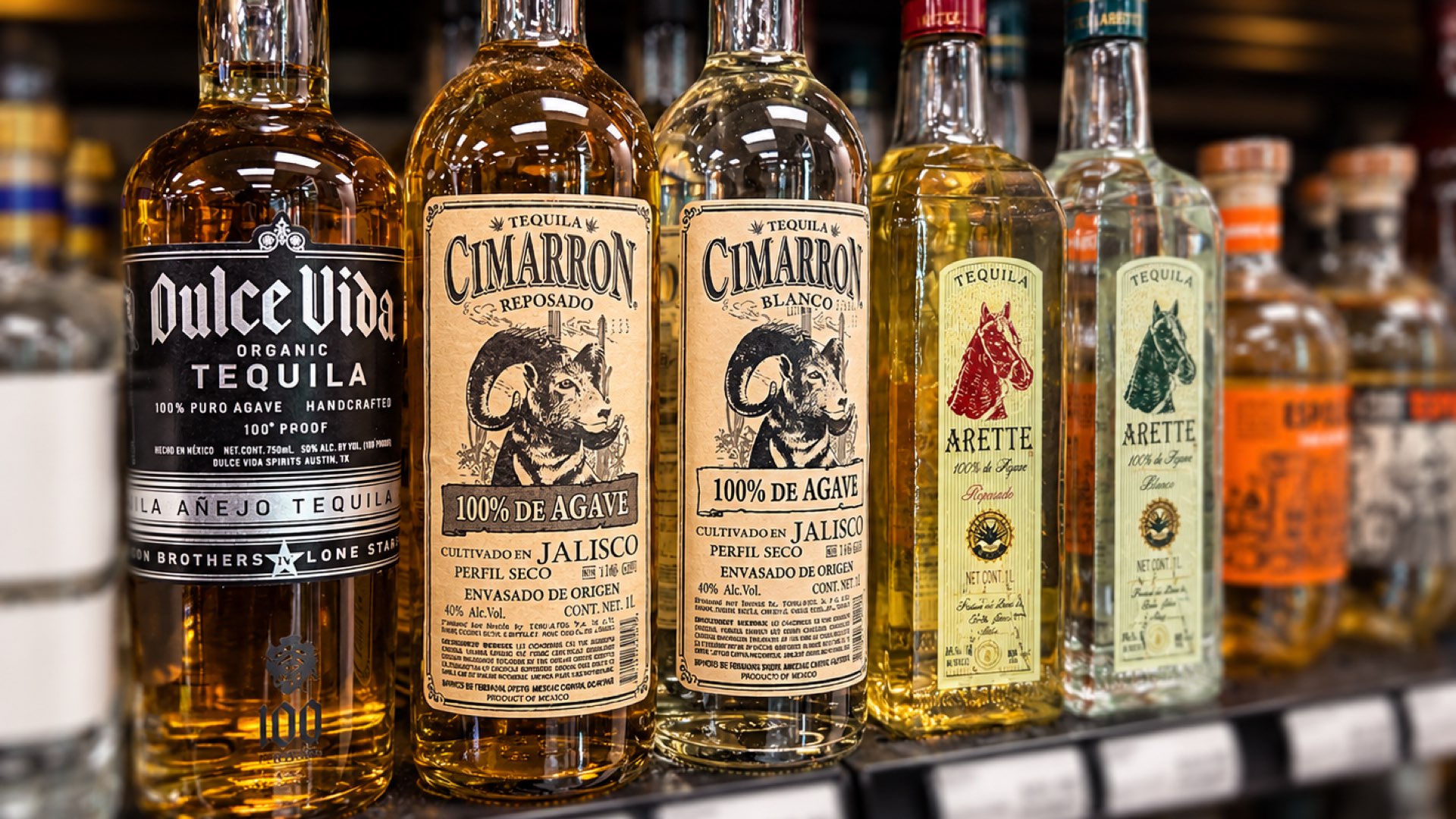
Spirits · The Spirits Explained · Part 4 of 6
Tequila & Mezcal: The Spirit of Agave, Fire & Tradition
From sun-drenched agave fields to smoky earthen pits, an introduction to Mexico's most celebrated spirits.
Indulge me, if you will, as we take a trip down memory lane. Picture yourself descending a dimly lit staircase into a crowded room. Your shoes stick to the floor. The air is warm, stale, and mildly nauseating. People are packed like sardines in a tin can. Somewhere in the chaos, someone is laughing far too loudly, and something made of glass just met an untimely end.
Yes, your worst fears have been realized: you’re in a college dive bar.
And in this kingdom of questionable decisions, one liquor reigns supreme. The undisputed champion of bad ideas, the instigator of endless rounds of shots, and the spirit forever accompanied by a suspiciously sticky salt shaker and a lime wedge that’s seen better days. It's been blamed for lost inhibitions, catastrophic dance moves, and countless next mornings when someone swears, with remarkable conviction, ”I’m never drinking again”...with all the sincerity of that someone who will absolutely be drinking again by next Friday.
Welcome to the empire of Tequila.
But a few doors away, another scene transpires. In an equally dimly lit space - this time intentional - the air hangs heavy with woodsmoke, the room is elegantly decorated. Here dwells tequila's mysterious, smoky relative, served in rustic clay cups at cocktail bars by someone who seems extraordinarily passionate about the difference between roasting and steaming. Those who drink Mezcal sit in the corner, contemplate the flames, and explain why you’ve been drinking agave all wrong.
Both cousins make up the family of agave-based spirits. And behind the party reputation, elaborate cocktail presentations, and occasional worm floating at the bottom of a bottle lies perhaps the most fascinating tradition in the world of spirits.
Tequila and mezcal are products of an extraordinary plant, centuries of Mexican craftsmanship, and production methods that can range from highly sophisticated industrial operations to techniques carefully preserved across generations. While they're often discussed as entirely separate spirits, they have far more in common than you might think.
So put down the salt shaker, set aside the lime wedge, and forget everything your college roommate told you about tequila.
We're going to discover what's actually behind the bottle.
One tequila, two tequila, three tequila, floor.
George Carlin
Agave: The Plant That Started It All
Before we talk about tequila or mezcal, we need to talk about the rather remarkable plant responsible for both.
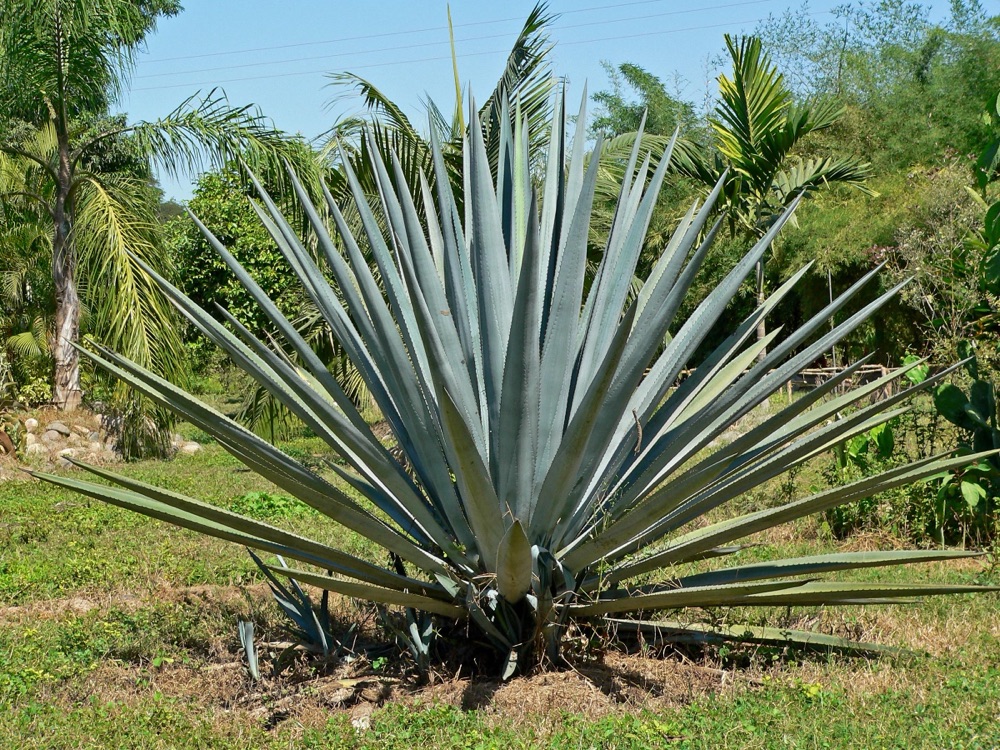
Agave is a group of succulent plants native to the Americas, particularly abundant and culturally significant in Mexico. With their thick, pointed leaves radiating outward from a central core, agaves have a dramatic, almost prehistoric appearance. They look a bit like enormous pineapples wearing armor.
And despite their desert-loving reputation, agaves are not cacti. They're succulents belonging to a different botanical family, more closely related to asparagus than to the prickly cacti they so often resemble.
Yes, asparagus. Try not to think too hard about that the next time you're enjoying a Margarita.
The Piña: Where the Magic Happens
The part of the agave used to make most tequila and mezcal is its central core, known as the piña. The name means pineapple in Spanish, which makes sense once you've seen one. When the plant's long, spiky leaves are removed, the exposed heart looks remarkably like an oversized pineapple.
But don't expect it to taste like one.
Agave piñas contain carbohydrates, including fructans, that can be converted into fermentable sugars through cooking or other processing methods. These sugars ultimately provide the alcohol that becomes tequila or mezcal.
The key distinctive factor about agave is that, unlike grains that can be harvested annually, agave plants can take many years to reach maturity. For example, Blue Weber agave, used for tequila, commonly takes around six to eight years to mature, though growing conditions can change that considerably. Some agave species used for mezcal can require well over a decade.
Imagine waiting that long to harvest the main ingredient for your next batch of spirits. Suddenly, whiskey's aging process doesn't sound quite so patient.
Meet the Jimador
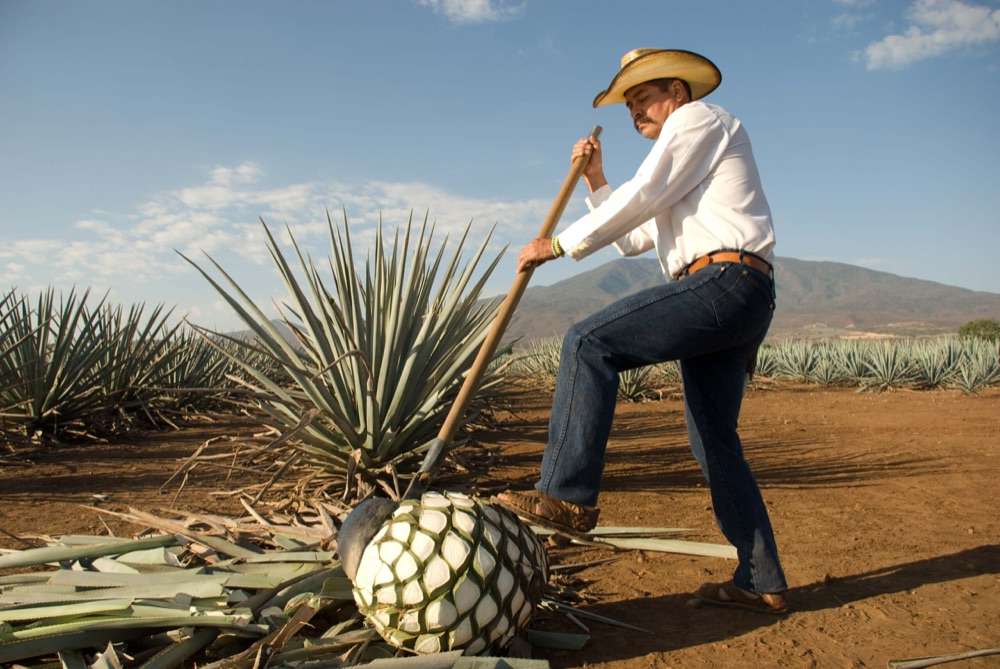
The unsung heroes of agave harvesting are the workers known as jimadores.
Harvesting is a skilled profession; using a sharp, long-handled tool called a coa, jimadores trim away the agave's formidable leaves to expose the piña beneath.
It's physically demanding work that requires experience, precision, and a healthy respect for extremely sharp objects.
The harvested piñas are then transported for processing, beginning a journey that will eventually turn a spiky field plant into a beautifully complex spirit.
A Brief History: Ancient Traditions, Colonial Distillation & Mexican Heritage
The story of agave spirits stretches back centuries, long before the Margarita became a staple of beach vacations.
Indigenous communities throughout Mexico used agave for a remarkable variety of purposes, including food, fibers, tools, and fermented beverages. One particularly important drink was pulque, an alcoholic beverage made by fermenting the sweet sap of certain agave plants.
Pulque existed long before European colonization and played important roles in the cultural and ceremonial traditions of several Indigenous societies.
But there's an important distinction.
Pulque is fermented, not distilled.
It is effectively agave beer. Tequila and mezcal, on the other hand, are distilled spirits.
When Distillation Entered the Picture
The development of distilled agave spirits is closely tied to the spread of distillation techniques in Mexico during the colonial period, especially from the 16th century onward.
The exact history is complicated, and researchers continue to debate whether some forms of distillation may have existed in the Americas before European contact. What we do know is that Mexican producers eventually developed distinctive methods for cooking, fermenting, and distilling agave, adapting equipment and techniques to local resources and traditions.
Different regions developed their own approaches, and over time, many of those spirits became associated with particular communities and places.
The word mezcal itself comes from a Nahuatl-derived term associated with cooked agave.
Historically, it referred broadly to agave-based spirits, and tequila emerged from that wider tradition. Today, however, tequila and mezcal are governed by separate Mexican production standards and protected geographical designations.
How Tequila Became Tequila
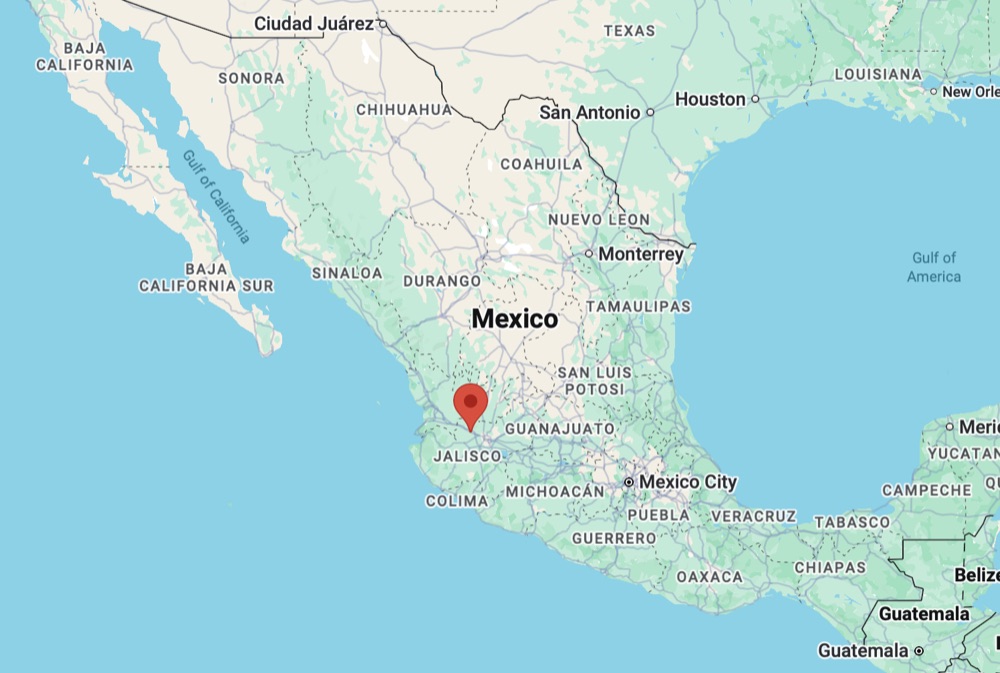
The area surrounding the town of Tequila, in the Mexican state of Jalisco, became especially influential in the development of the spirit that eventually took its name.
As production expanded, particular distilleries and families helped establish tequila as an important commercial product.
By the 20th century, tequila had evolved into one of Mexico's most recognizable cultural exports. Its international popularity grew alongside the rise of cocktails such as the Margarita and, later, the increasing appreciation of premium tequilas intended for sipping.
Mezcal followed a somewhat different path, preserving numerous regional production traditions and eventually attracting its own growing international audience. Today, both spirits represent much more than cocktail ingredients.
They're expressions of Mexico's agricultural heritage, production knowledge, and remarkable diversity.
How Agave Spirits Are Made: From Field to Glass
Despite their differences, tequila and mezcal share a broadly similar production journey.
Both begin with mature agave plants, and both involve converting the plant's carbohydrates into sugars, fermenting those sugars into alcohol, and distilling the resulting liquid.
But the methods used along the way can produce dramatically different results.
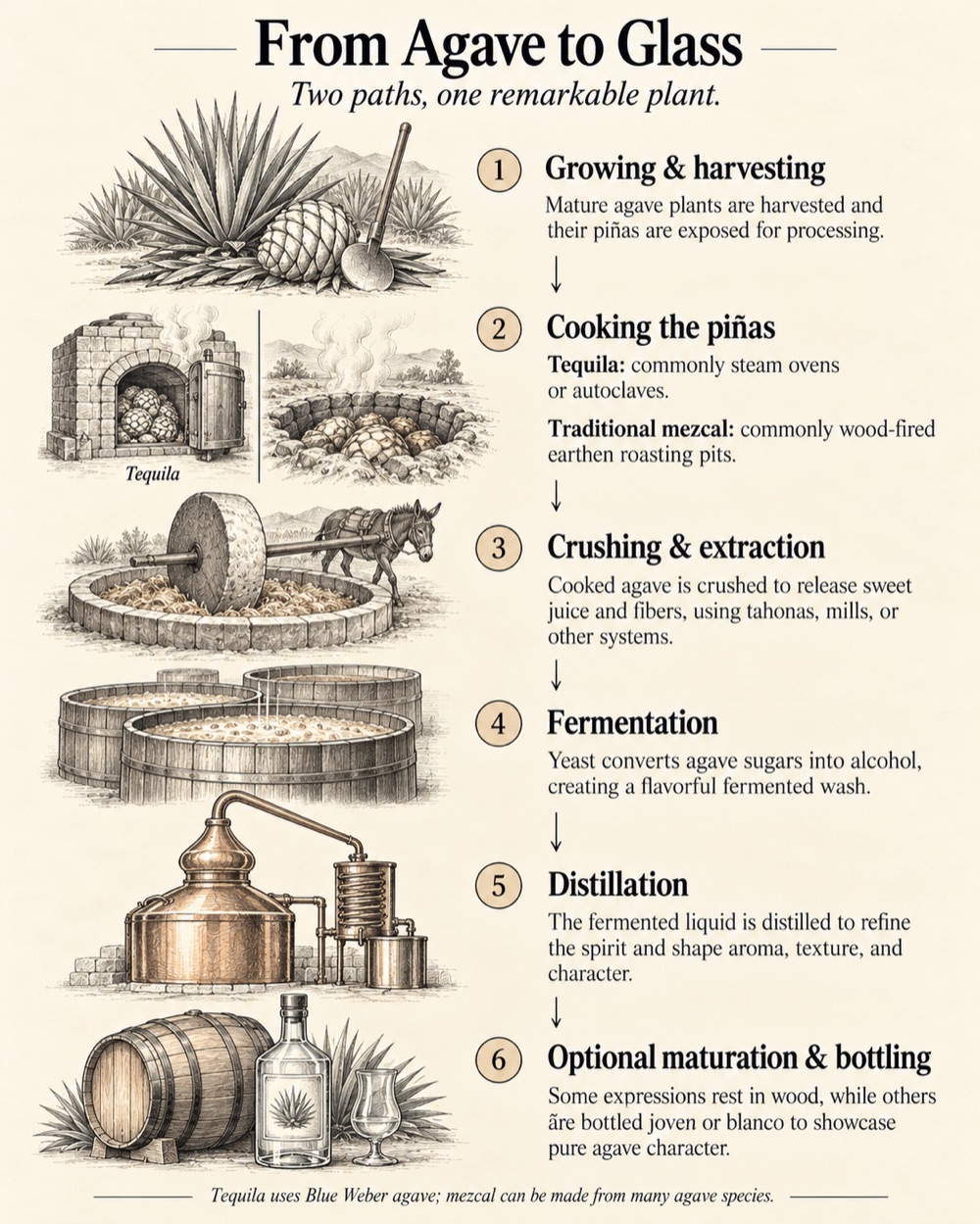
1. Harvesting the Agave
First, mature agave plants are harvested and their leaves removed, leaving the piñas.
As we've already seen, this can represent years of cultivation and careful agricultural management. Unlike vodka or whiskey production, where grain crops can be grown and harvested relatively quickly, agave producers have to plan around the plant's unusually long life cycle.
That's one reason responsible sourcing and agricultural sustainability matter so much in this industry.
2. Cooking the Piñas
Raw agave contains complex carbohydrates that need to be broken down into fermentable sugars. Cooking is a traditional and widely used way of achieving this, and the chosen method can influence the eventual spirit's flavor.
Tequila producers commonly cook agave in steam-heated brick ovens or industrial autoclaves, which are essentially large pressure-cooking vessels. Some producers use alternative extraction and hydrolysis technologies, allowing the processing of agave without conventional whole-piña cooking.
Traditional mezcal producers, meanwhile, often roast their agave in earthen pits lined with stones and heated using wood fires. The agave may spend days cooking beneath layers of insulating material, gradually becoming soft, sweet, and aromatic.
Because the agave is exposed to the environment of a wood-fired pit, smoky compounds can find their way into the finished spirit. That’s why mezcal has its famous smoky character.
But remember: not all mezcal is made using exactly the same cooking method, and not all mezcal is intensely smoky.
3. Crushing and Extracting the Sugars
Once the agave has been cooked or otherwise processed, its sugars need to be made available for fermentation.
Some traditional producers crush the cooked piñas using a large stone wheel called a tahona, often turned around a circular pit. Others use mechanical mills, shredders, or more industrial extraction systems.
For certain traditional mezcals, crushing may even be done by hand using wooden mallets.
It's a fascinating illustration of the diverse methods used to get fermentable material out of the agave.
4. Fermentation
Now comes a familiar friend from our earlier articles: yeast.
The sugars extracted from the agave are fermented, producing alcohol and a host of flavor compounds. Some producers use carefully selected yeast strains and controlled fermentation conditions, while others rely partly or entirely on naturally occurring microorganisms.
Traditional mezcal fermentation may take place in wooden vats, stone-lined vessels, or other locally established containers, sometimes with the crushed agave fibers included.
Fermentation contributes significantly to the spirit's eventual aroma and flavor. So while cooking gets much of the attention, yeast deserves some credit too.
5. Distillation
Once fermentation is complete, the alcoholic liquid is distilled.
Tequila is typically produced using pot stills, column stills, or combinations of distillation equipment, depending on the producer.
Mezcal producers may use copper pot stills or traditional clay vessels, among other permitted methods. Some mezcal production traditions involve remarkably simple equipment, while others use more modern systems.
The precise distillation method influences which flavors are concentrated, retained, or removed.
6. Maturation and Bottling
Aging is not necessary (hence blanco expressions), but some distillers may allow the spirit to mature in wooden containers if desired.
For tequila, aging creates familiar classifications such as reposado and añejo. Mezcal can also be aged, although many producers prefer unaged expressions that preserve the direct character of the agave and production process.
Whether aged or freshly distilled, the spirit is then generally adjusted to its desired strength, then bottled and prepared for sale.
And there you have it: years of agricultural cultivation, followed by an intricate sequence of cooking, fermentation, and distillation.
All so you can order a Margarita in approximately twelve seconds.
Tequila vs. Mezcal: What's Actually the Difference?
Now for the question you've probably been waiting to ask: tequila and mezcal are both made from agave, so is their cooking technique the only thing that separates them?
Actually, no. The real legal difference is that tequila must be made from Blue Weber agave, while mezcal encompasses a broader range of agave species and production traditions under its own regulations.
Here's how the two generally compare.
| Feature | Tequila | Mezcal |
|---|---|---|
| Raw material | Blue Weber agave only | Multiple permitted agave species |
| Geography | Designated areas of five Mexican states | Designated production regions of Mexico |
| Common cooking methods | Steam ovens, autoclaves, and other permitted methods | Earthen roasting pits, masonry ovens, and other permitted methods |
| Distillation | Pot stills, columns, or combinations | Equipment varies by production category, including copper and clay stills |
| Typical flavor profile | Cooked agave, citrus, pepper, herbal or earthy notes | Agave, herbs, fruit, minerals, earth, and sometimes smoke |
| Aging | Blanco, reposado, añejo, extra añejo, and joven | Includes joven/blanco, reposado, añejo, and other recognized classes |
| Cocktail favorites | Margarita, Paloma, Tequila Sunrise | Mezcal Margarita, Oaxaca Old Fashioned, mezcal-based Negroni variations |
It's tempting to summarize the difference as “tequila is smooth and mezcal is smoky,” but that doesn't really do justice to either spirit.
Tequila can be peppery, grassy, fruity, or richly oaked.
Mezcal can be smoky, certainly, but it can also be floral, tropical, herbal, earthy, or beautifully delicate. Two mezcals produced from different agave species may taste more different from each other than a particular tequila and mezcal do.
Understanding Tequila: Blanco, Reposado & Añejo
If you've spent any time browsing tequila shelves, you've probably noticed several familiar terms appearing again and again.
Blanco. Reposado. Añejo.
These terms describe whether and how long tequila has been has been matured.
1. Blanco: Agave Alone
Blanco tequila, sometimes labeled silver or plata, is generally bottled without extended barrel maturation, although the category allows brief resting under specified conditions.
Because it spends little or no time developing oak flavors, blanco tequila often offers the clearest expression of the agave itself → expect notes that might suggest citrus, pepper, fresh herbs, cooked agave, or gentle sweetness.
If you want to understand what tequila tastes like before a barrel gets involved, blanco is an excellent place to begin.
Behind the bar: Blanco is a fantastic choice for Margaritas, Palomas, and other refreshing cocktails where its brighter agave character can shine.
2. Reposado: A Little Time in Oak
The word reposado means “rested.”
Reposado tequila must spend at least two months in contact with oak or holm oak wood. That relatively short maturation can soften the spirit's sharper edges and introduce flavors reminiscent of vanilla, caramel, baking spices, or gentle toasted wood. Whiskey-lovers tend towards preferring reposados on their palate for this reason, and it’s a good way to introduce them to the agave family.
A reposado still retains recognizable agave character, but with additional complexity from the wood. Think of it as blanco tequila returning from a relaxing vacation with a slightly more sophisticated wardrobe.
Behind the bar: Reposado works beautifully in Margaritas with a richer flavor profile, spirit-forward tequila cocktails, or an agave-based Old Fashioned.
3. Añejo: The Oak Influence Grows
Añejo means “aged,” and añejo tequila must mature for at least one year in oak or holm oak containers of limited size.
As the spirit spends more time in contact with wood, it can develop deeper flavors of vanilla, caramel, dried fruit, spice, and oak. Depending on the producer, some añejos begin to resemble certain aged whiskeys in their richness and texture.
That makes them even more interesting for anyone who already enjoys bourbon or other barrel-aged spirits.
Behind the bar: Añejo is frequently enjoyed neat, but it can also make a wonderful base for an Old Fashioned-style cocktail.
4. Extra Añejo: Patience in a Bottle
Extra añejo tequila must mature for at least three years in qualifying oak containers.
These expressions often feature substantial barrel influence and can become rich, complex, and relatively expensive.
But more aging doesn't automatically mean better tequila. Too much oak can overwhelm agave's natural character, just as heavy barrel influence can dominate certain whiskies.
The best choice depends on what you enjoy.
What About Joven and Cristalino?
You may also encounter joven, sometimes called gold tequila.
Joven is an official tequila class that can include combinations of blanco with matured tequila, while certain permitted additions can also influence a product's color and character.
So don't assume a golden-colored tequila has necessarily spent years in a barrel.
Meanwhile, cristalino is a popular commercial description for tequila—commonly aged tequila—that has undergone filtration to remove much of its color. Cristalino isn't a separate official aging class, and its nearly transparent appearance shouldn't be confused with an unaged blanco.
100% Agave vs. Mixto?
Besides aging, Mexican regulations recognize two major tequila categories based on the source of fermentable sugars.
100% agave tequila must obtain all its fermentable sugars from Blue Weber agave.
Tequila in the other category, commonly called mixto, must obtain at least 51% of its fermentable sugars from Blue Weber agave species, with up to 49% coming from other permitted sugars.
Both can legally be sold as tequila.
That doesn't mean every mixto is terrible or that every 100% agave bottle is automatically exceptional. But for someone learning to appreciate tequila's natural character, 100% agave is usually the more informative starting point.
Look for the words “100% de agave” on the bottle.
And remember, the distinction concerns the sugars used before fermentation; not an indication that someone poured 49% sugar syrup into the finished drink.
Exploring Mezcal: More Than Just Smoke
Now we move on to Mezcal. If tequila is known for its recognizable aging classifications, mezcal is known for its diverse agave varieties and involved production traditions.
For many newcomers, mezcal's identity begins and ends with one word: smoky.
And yes, certain mezcals can taste unmistakably smoky, sometimes with aromas reminiscent of wood fires, roasted vegetables, or smoldering embers. But treating all mezcal as a smoke bomb is like assuming every Scotch whisky tastes like a campfire.
Different Agaves, Different Personalities
Tequila must use Blue Weber agave, but mezcal can be produced from many different agave species.
Three useful names to recognize are:
- Espadín: One of the most widely cultivated agaves for mezcal, often producing accessible spirits with earthy, herbal, fruity, or smoky characteristics.
- Tobalá: Associated with smaller agave plants and often prized for complex, sometimes floral or fruity expressions. These mezcals can be relatively expensive.
- Tepeztate: A slow-maturing agave associated with distinctive, often intensely herbal and aromatic mezcals.
Of course, these aren't universal flavor guarantees. The terroir, harvesting decisions, fermentation, cooking methods, and distillation practices can all influence the result. But the species is an important place to start.
Mezcal, Artesanal & Ancestral
Mexican mezcal regulations distinguish three production categories:
- Mezcal: A regulated category that permits a broader range of production equipment and methods.
- Mezcal Artesanal: Produced using specified traditional-style methods and equipment, which can include earthen ovens, tahona milling, and certain pot stills.
- Mezcal Ancestral: Produced under particularly restrictive traditional-method requirements, including cooking in earthen pits and distillation using clay vessels.
The categories reflect production methods, not an official ranking of taste or quality. An artesanal mezcal isn't automatically superior to every mezcal in the broader category, and an ancestral mezcal isn't guaranteed to suit everyone's palate.
Does Mezcal Need to Be Aged?
Nope. And in fact, many enthusiasts particularly appreciate unaged mezcal.
Joven or blanco mezcal preserves the direct character of the agave, fermentation, cooking, and distillation without introducing substantial wood influence.
Reposado and añejo expressions also exist, along with other recognized classes, including mezcal matured in glass. But unlike tequila, where aged expressions are often a prominent part of the retail experience, unaged mezcal plays an especially important role in showcasing the production tradition.
Some Familiar Mezcal Names
If you're looking to begin exploring, a few widely recognized names include:
- Del Maguey: Known for expressions showcasing different mezcal traditions, including its approachable Vida range.
- Montelobos: Often associated with Espadín mezcal and a distinctive roasted-agave profile.
- Ilegal Mezcal: Offers familiar joven, reposado, and añejo expressions.
- Mezcal Unión: Known for accessible expressions that can work well in cocktails.
These are starting points rather than a definitive ranking.
And as you become more interested in mezcal, I'd encourage you to look beyond the biggest names. Smaller producers and individual mezcaleros often make fascinating expressions that showcase their particular agricultural and distillation traditions.
Wait...What's With the Worm?
Ah, yes. We should make a quick note about the infamous worm at the bottom of the mezcal bottle. Contrary to popular belief, it isn't actually a worm at all, but the larva of a moth that feeds on agave plants, known as a gusano de maguey. And despite what your overly enthusiastic drinking buddy might tell you, eating it won't make you hallucinate, grant you supernatural powers, or magically improve your tolerance for alcohol.
The practice of putting a gusano in mezcal bottles only became popular around the 1940s and 1950s, largely as a marketing gimmick to distinguish certain brands. It's not a centuries-old requirement, nor is it an indication of superior quality. In fact, most mezcal bottles don't contain one at all. The lack of a worm doesn't indicate lack of authenticity.
And one last thing: authentic tequila never contains a worm. That particular honor belongs to mezcals. So if you ever encounter someone insisting that the worm is the mark of a truly exceptional tequila, congratulations - you now know something they don't.
Tequila & Mezcal Behind the Bar
All right, so you've learned about agave plants, piñas, roasting pits, barrel aging, and production terminology. But what does any of this actually mean when you're standing behind your home bar?
Quite a lot, as it turns out.
Tequila and mezcal are both remarkably useful cocktail ingredients, but they bring different personalities into a drink.
A bright blanco tequila can contribute peppery, herbal, and citrus-friendly notes. A reposado introduces some of the vanilla and oak character associated with maturation.
An assertive, smoky mezcal can transform an otherwise familiar cocktail into something completely different.
Five Agave Cocktails Worth Knowing
I'd start with these 5 cocktails to begin exploring the agave spirit family:
| Cocktail | What it teaches you |
|---|---|
| Margarita | How agave spirit balances lime, sweetness, and orange liqueur |
| Paloma | The relationship between tequila, grapefruit, acidity, and carbonation |
| Tommy's Margarita | How tequila, lime, and agave syrup work without orange liqueur |
| Oaxaca Old Fashioned | Combining aged tequila and mezcal in a spirit-forward cocktail |
| Mezcal Margarita | How mezcal changes a familiar citrus cocktail |
Not only are these classics, they're also easy to build and excellent opportunities for you to see how swapping around tequilas and mezcals, or even combining them, can affect the texture and taste of a cocktail.
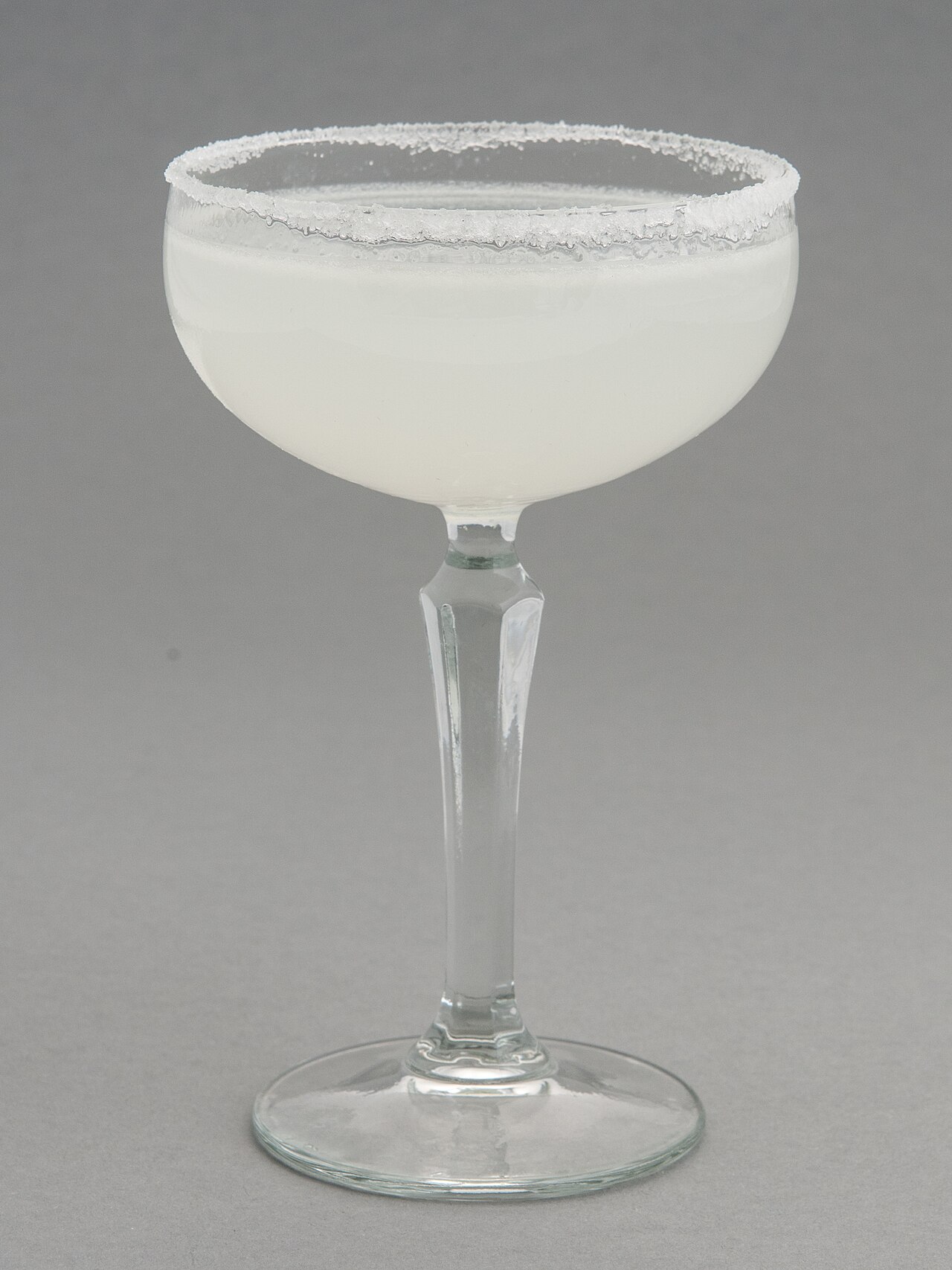
Margarita
tequila, orange liqueur, lime
Tommy's Margarita
agave syrup in place of orange liqueur
Oaxaca Old Fashioned
whiskey -> tequila + mezcal
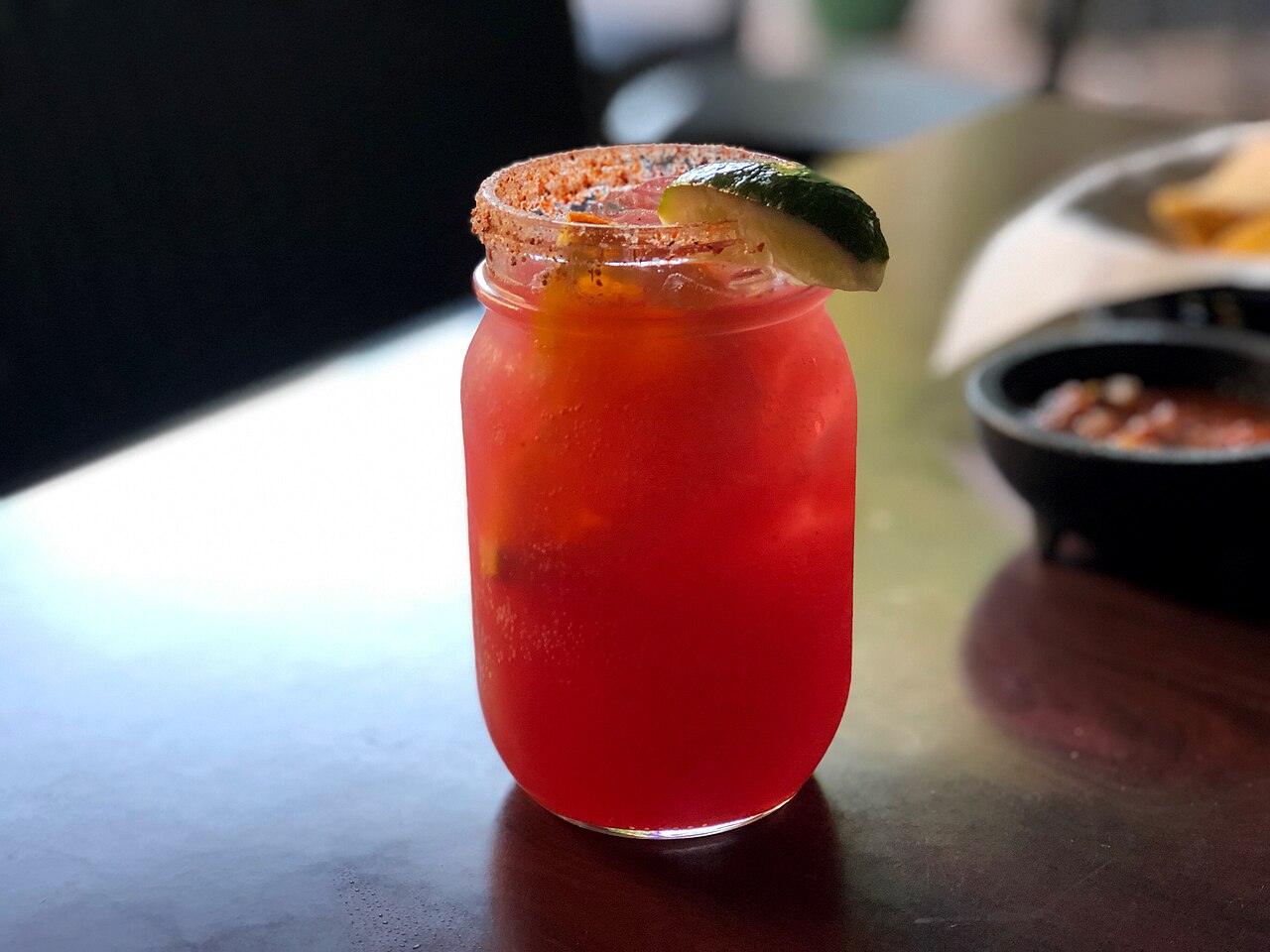
Paloma
tequila, lime, grapefruit soda
So Can You Substitute Mezcal for Tequila?
Absolutely. In fact, it's one of the simplest ways to learn how these spirits differ.
Make your favorite Margarita with blanco tequila, then try the same recipe using mezcal. You'll often find the mezcal version brings additional earthy, roasted, herbal, or smoky notes that substantially change the overall character.
However, a full substitution can sometimes overwhelm the other ingredients, especially if you're using a particularly intense mezcal.
One useful approach is to replace only a portion of the tequila with mezcal - something we call a split-base cocktail.
That way, you can introduce some of mezcal's distinctive flavor without allowing it to dominate the entire drink.
A little smoke can be wonderful.
An entire forest fire in your Margarita may be less desirable.
Choosing the Right Agave Spirit
For bright, refreshing cocktails with plenty of citrus, blanco tequila is usually an excellent starting point.
For richer, spirit-forward drinks, reposado tequila can introduce welcome depth.
Añejo tequila can work beautifully in cocktails that traditionally rely on barrel-aged spirits.
And mezcal is particularly useful when you want to introduce complexity, roasted flavors, herbal character, or smoke.
There's no need to own fifteen bottles to get started. A dependable 100% agave blanco tequila and an approachable Espadín mezcal will give you plenty of room to explore.
How to Taste Agave Spirits Without Reaching for the Salt
Now comes the fun part.
Unfortunately, many people's first experience with tequila involves consuming it as quickly as possible, immediately followed by salt, lime, and a fairly dramatic facial expression.
Which, admittedly, is one way to drink tequila. But if you want to appreciate what goes into these spirits, it's worth slowing things down.
1. Start With Blanco Tequila
A good 100% agave blanco tequila is an excellent introduction. Pour a small amount into a tasting glass and observe its aroma before sipping. You might notice cooked agave, citrus, herbs, pepper, or a gentle vegetal sweetness.
2. Smell Gently
As with whiskey and gin, there's no need to aggressively inhale alcohol vapor. Take a few light sniffs and pay attention to the broad impressions.
Is the aroma fresh and herbal? Sweet-seeming? Earthy? Peppery?
3. Take a Small Sip
Let the spirit move gently across your palate. Notice its texture, warmth, sweetness, acidity, and lingering flavors. Does it feel crisp and lively, or richer and more rounded?
If you're comparing blanco with reposado, see whether you can identify the influence of the barrel.
4. Try a Mezcal
Next, taste an approachable unaged Espadín mezcal. Pay attention to the roasted-agave character and any smoky, earthy, herbal, or fruity notes. Remember that smoke is only one possible part of the experience. A well-made mezcal can be wonderfully complex even when smoke is relatively restrained.
5. Compare Them Side by Side
Now try comparing a blanco tequila with an unaged mezcal. Both are agave spirits, yet they may have dramatically different aromas, textures, and finishes.
If you're curious, add a reposado tequila to the lineup and see what a little time in oak brings to the equation. You'll begin to recognize how much production methods and maturation influence the spirit.
6. Forget the Rules About How You're Supposed to Drink It
There's nothing wrong with enjoying tequila or mezcal in a cocktail, just as there's nothing wrong with appreciating a well-made expression on its own.
Traditional serving practices vary, and you don't need elaborate rituals or specialized glassware to begin exploring.
The important thing is paying attention to what you're tasting. And perhaps allowing the spirit to remain in your mouth long enough for you to actually notice its flavor.
A novel concept, I know.
A Final Word About Agave Spirits
If there's one thing I hope you've taken away from this introduction, it's that tequila and mezcal deserve far more appreciation than their reputations sometimes allow.
Behind every bottle is a plant has spent years growing under the Mexican sun, the hard toil of people who understand how and when to harvest it, and a series of production decisions that shape the final spirit.
Some expressions are clean, bright, and peppery. Others are rich with oak, herbs, roasted agave, or smoke.
And what makes the agave family so distinctive is that these differences can arise from the plants themselves, the landscapes in which they're grown, and the methods used to turn them into spirits.
For the aspiring home bartender, learning about tequila and mezcal opens up an entirely new world of flavors. You'll begin to understand why blanco tequila works beautifully in a Margarita, why reposado can create a wonderfully rich Old Fashioned, and why adding a little mezcal can transform a familiar cocktail.
But perhaps more importantly, you'll begin seeing these spirits as expressions of an agricultural and cultural tradition rather than simply something to pour into a shot glass.
So next time someone suggests a round of tequila shots, by all means, enjoy the occasion if that's your thing.
But maybe also take a moment to appreciate what's in the glass.
After all, that little pour represents years of growth, generations of knowledge, and a remarkable amount of work.
More in The Spirits Explained
Spirits · The Spirits Explained
Whiskey: The World of Grains, Barrels & Tradition
An introduction to one of the most diverse dark spirits
Spirits · The Spirits Explained
Gin: Juniper, Botanicals & Herbs
From medicinal beginnings to martinis and everything in between, a beginner's introduction to the botanical world of gin.
Spirits · The Spirits Explained
Vodka: The Art of Simplicity, Purity & Precision
From humble grains and potatoes to the world's most versatile cocktails, an introduction to the deceptively simple spirit.