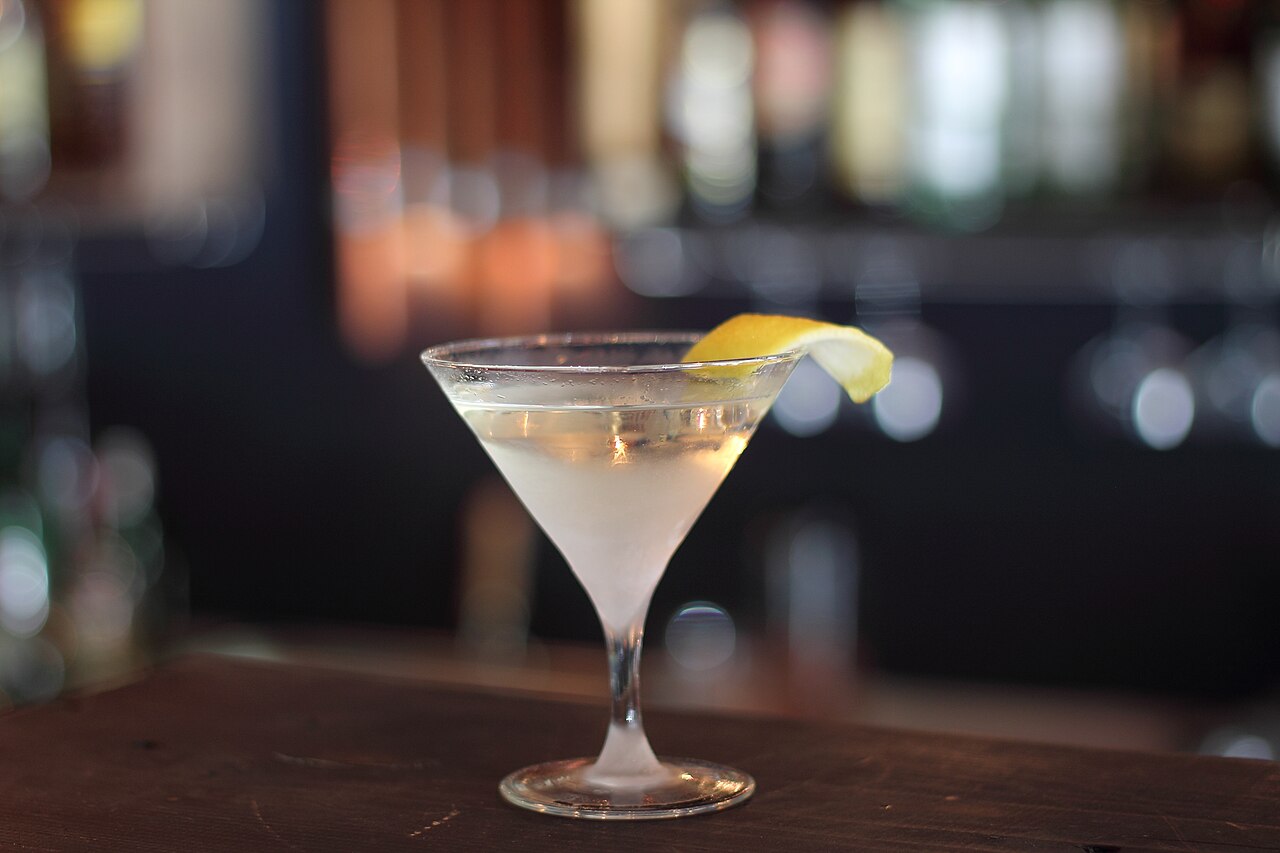
Classic · Gin
Dry Martini
Gin and dry vermouth, stirred ice cold and served up. Endlessly debated, endlessly adapted.
Ingredients
- 2 ½ ozLondon dry gin (preferably frozen)
- ½ ozDry vermouth
- 1 dashOrange bitters (optional)
Method
- Stir all ingredients with ice until very cold.
- Strain into a chilled martini or coupe glass.
- Garnish with a lemon twist or olive.
History
Much has been written about the martini's history, so we'll try to keep it simple here. Early martinis (late 1800s) were actually sweet - they used sweet vermouth. This was partly due to the fact that early martinis used genever or Old Tom gins -> they are juniper-forward and a touch sweeter than the London Dry commonly used today. Importantly, they were also called "Manhattans" rather than martinis, which falls in line with the fact that the martini family involves spirits + fortified/aromatized wine: the formula for a typical Manhattan. The Martinez cocktail itself actually predates the Dry Martini, being an evolution of the Manhattan in which gin was substituted for the whiskey component, still keeping the sweet vermouth and bitters.
It was not until the turn of the 19th century that the prevalence of drier gins gave rise to drier martinis, including switching the sweet vermouth for dry ones. Some ratios went all the way to 11:1 gin:vermouth, resulting in practically drinking chilled gin served straight up. This lasted for many decades until the craft cocktail boon in the late '90s to early 2000s, when numerous bartenders began creating 'Tinis - drinks that are actually mostly sours - served in martini glasses. Although not true martinis, these drinks changed public perception of the martini, and the dry martini began to fade away as palates evolved. The late Sasha Petraske, who opened New York City’s Milk & Honey (now Attaboy) in 1999, made his Martinis with a 2:1 ratio of gin-to-vermouth and orange bitters, calling it the "Wet Martini". However, in recent years, some drinkers began asking for a return of olive brine in their drink (something that had some popularity in the mid-century) to temper the sweetness without increasing the spirit volume, resulting in the "dirty" martini. The result is a gradual return to drier martinis, although probably never fully to the mid-century levels. Discerning drinkers who desire those ratios now ask for specific named cocktails that describe them: Churchill (Bone-Dry) or Reverse martinis.
In this sense, the modern-day martini is perhaps the perfect example of the non-linear evolution of cocktails and their families: its current form is not how it started, and it is in fact a Manhattan; but because the martini effectively created an entirely new variety of cocktails, we now define it as a class unto its own.
Flavour
Details
- Glass
- Martini glass
- Garnish
- Lemon twist or olive
- Technique
- stirred