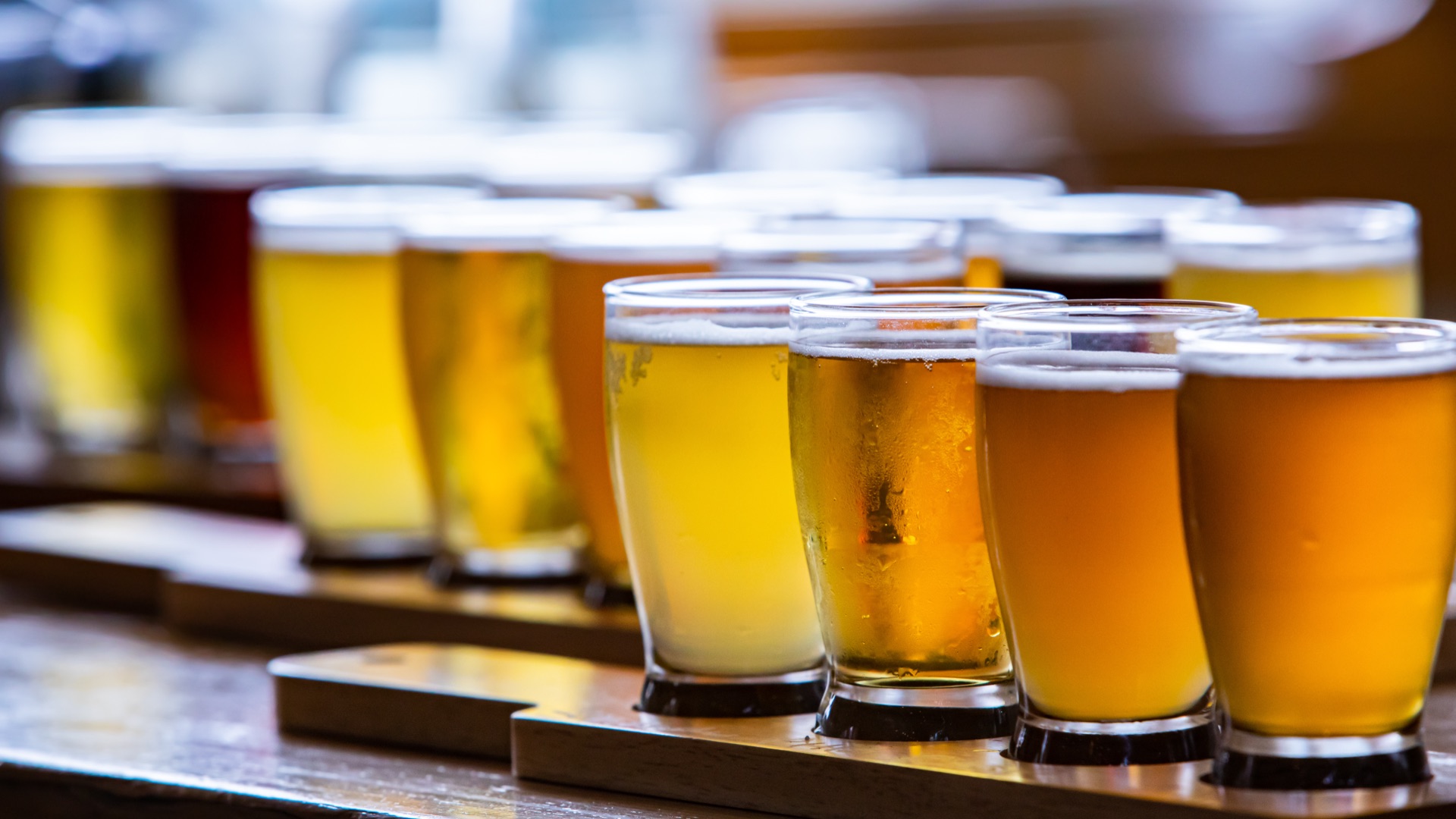
Fermentation: Where Alcohol (and Flavor) Begins
Before the stills, barrels, and elaborate botanical recipes, there's a microscopic workforce responsible for making the entire world of spirits possible
From college through medical school, I worked in multiple research labs studying and replicating microscopic cellular processes involved in cancer and cell regeneration. We had a workhorse upon which all our research was built and that kept our labs running: a small, single-celled fungus (or yeast) called Saccharomyces cerevisiae.
All over the world, this tiny microorganism might just be the most influential fungus in existence. Three Nobel prizes in medicine were given to discoveries that relied on it for their research. Numerous cancer and neurological drugs have been discovered and tested using it. Even the first whole genome sequence in 1996 used the yeast as its sequencing factory.
As it turns out, this organism is useful for more than just some of humanity’s greatest achievements; it has also had a hand in creating some of our...not-so-finest moments. Bread, cheese, and the rather astonishing collection of alcoholic beverages we've spent much of civilization perfecting all come from a process facilitated by this yeast.
Fermentation.
It's the reason grapes become wine, grains become beer, and sugarcane eventually becomes something you'd happily pour into a Daiquiri. It's been practiced for thousands of years, long before anyone understood the science behind it, and it relies on this army of microscopic organisms tirelessly consuming sugar and producing alcohol.
And what do these hardworking little creatures ask for in return? Some nutrients, a comfortable environment, and a preference to not to be boiled alive.
Fairly reasonable working conditions, if you ask me.
Of note, fermentation doesn't just produce alcohol. It also creates many of the compounds that give spirits their distinctive flavors and aromas.
Those fruity notes in Jamaican rum? Fermentation plays an enormous role. The subtle floral character of certain whiskies? Fermentation again. The fascinating differences between two mezcals produced using similar agave? You guessed it.
So before we dive into towering copper stills and centuries-old oak barrels, let's explore the process that makes all of it possible.
Because without fermentation, your favorite bottle of whiskey would still be a pile of grain…and that would make for a rather disappointing Old Fashioned.
Fermentation, in a Nutshell
At its simplest, alcoholic fermentation is a biological process in which yeast converts fermentable sugars into alcohol and carbon dioxide.
Seems straightforward enough - give yeast some sugar, allow it to get comfortable, and eventually you'll have an alcoholic liquid.
Yeast doesn't exist solely to produce alcohol for our enjoyment, of course. These microscopic organisms consume nutrients and metabolize sugars to obtain energy and sustain themselves.
It just so happens that ethanol and carbon dioxide are products of that metabolism under alcoholic fermentation conditions.
While alcohol is the main ingredient we're interested in, yeast also produces numerous other compounds that can influence aroma, flavor, and texture. These additional compounds help explain why fermented grape juice, grain mash, and sugarcane juice can develop such different characters before distillation even begins.
Fermentation vs. Distillation
Before we go further, let's establish one essential distinction:
Fermentation creates alcohol. Distillation concentrates it.
If you've read our introductory articles, you'll have encountered this principle several times.
During fermentation, microorganisms convert sugars into alcohol, producing a liquid that typically contains a relatively modest percentage of ethanol.
Distillation then separates and concentrates alcohol and selected volatile compounds from that fermented mixture.
In other words, a still doesn't magically create alcohol out of water, it works with the alcohol that fermentation has already produced.
And importantly, it also works with many of the flavor compounds created along the way.
Meet the Yeast: Nature's Microscopic Distiller
As we said earlier, the star of alcoholic fermentation is a living microorganism called yeast, most specifically:
Saccharomyces cerevisiae.
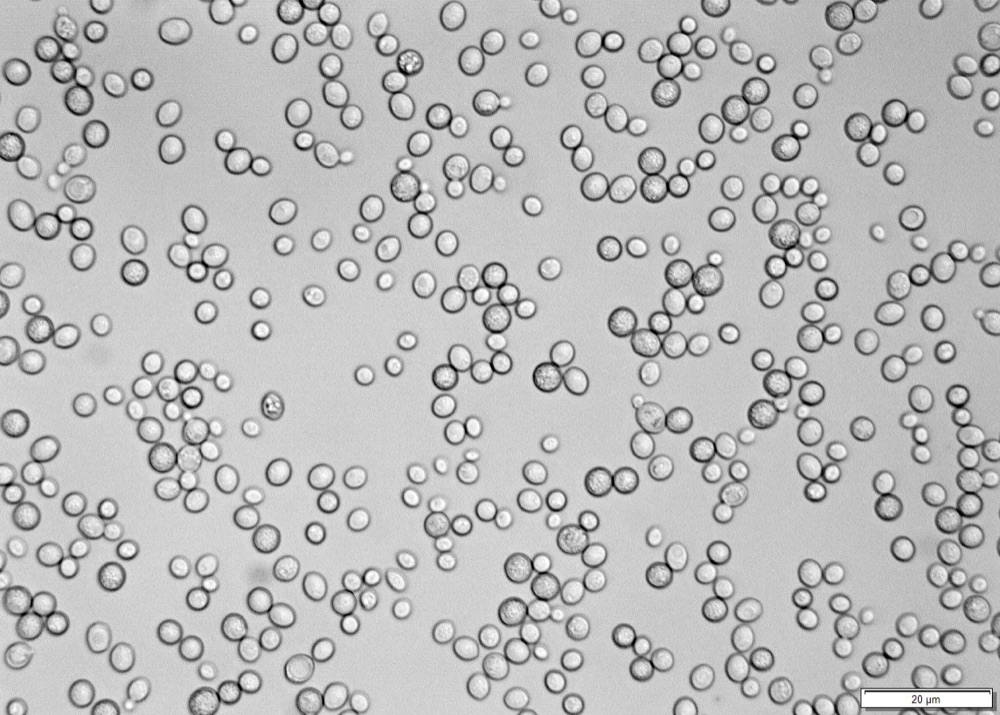
It's used extensively in brewing, baking, winemaking, and spirits production, hence its nickname “baker’s yeast” or “brewer’s yeast”.
Despite its intimidating scientific name, this is essentially a microscopic organism that has spent centuries helping people make bread rise and alcohol appear.
Quite the résumé.
What Does Yeast Actually Do?
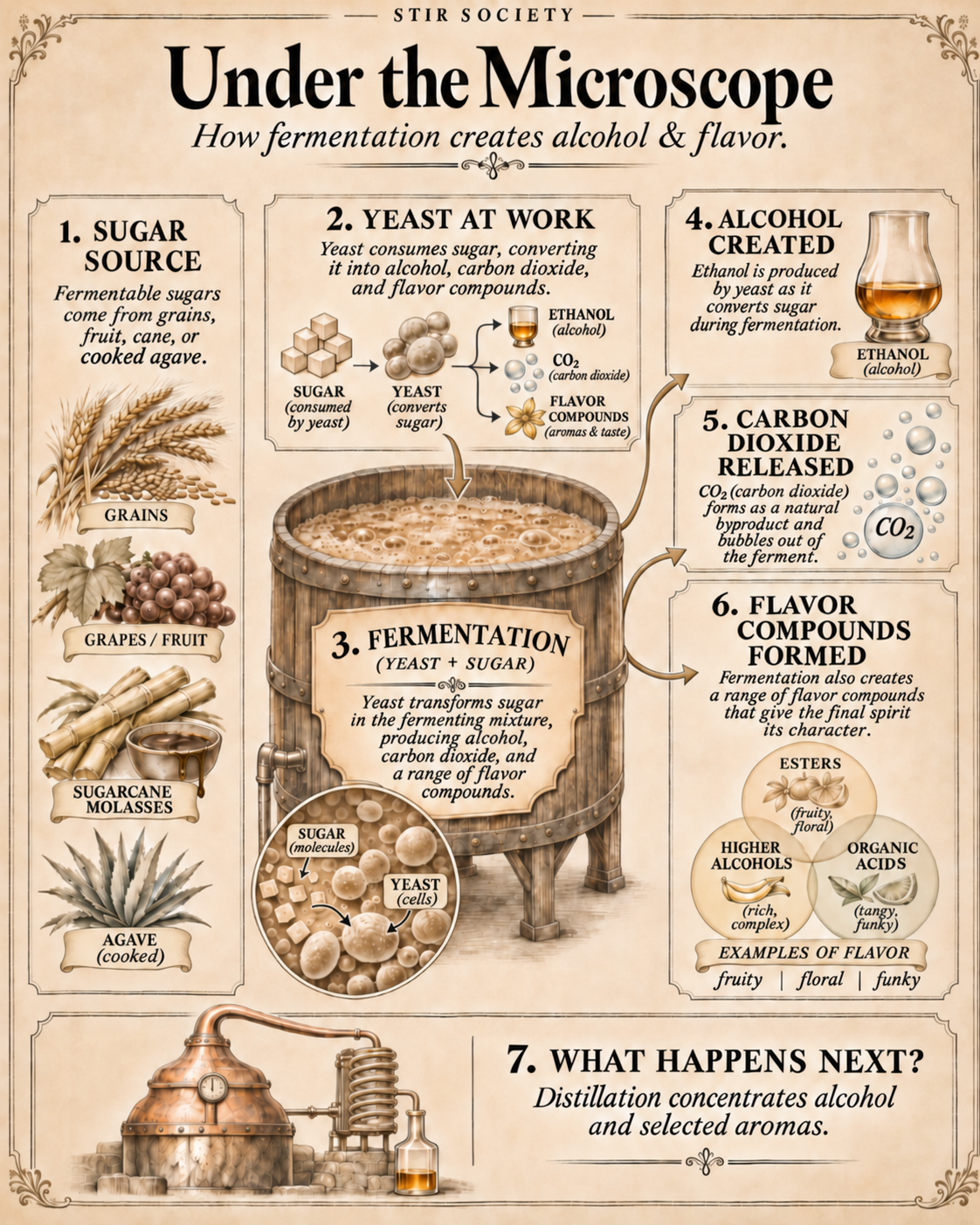
Yeast consumes fermentable sugars and uses a network of biochemical reactions to extract energy. Under suitable fermentation conditions, it produces ethanol and carbon dioxide.
A simplified version of the reaction looks like this:
Glucose → Ethanol + Carbon Dioxide + Energy
More precisely, one glucose molecule can be converted into two molecules of ethanol and two molecules of carbon dioxide, alongside a modest release of usable energy.
The reality inside a fermentation vessel is more complicated, involving numerous enzymes, intermediate compounds, and additional metabolic pathways.
But the basic idea is simple: sugar goes in, alcohol and carbon dioxide come out.
Not All Yeast Is Created Equal
Different yeast strains can behave differently, even when given the same raw materials. Some ferment efficiently and produce relatively restrained flavor profiles. Others may create larger amounts of certain fruity, floral, spicy, or sulfur-containing compounds.
Yeast selection is therefore an important production decision, not simply a matter of adding whatever happens to be available.
- A distiller producing a relatively neutral vodka might prioritize a clean, efficient fermentation.
- A whiskey producer may select a yeast strain partly for its contribution to aroma.
- A rum producer might embrace fermentation conditions that encourage particularly expressive flavors.
Winemakers are actually among the most aware of these differences; vintners choose yeast subtypes that have different temperature and sugar specifications to develop wines with different dryness and flavor notes. It can distinguish one bottle of wine from another even within the same producer.
Before Fermentation: Where Does the Sugar Come From?
Now, yeast is a living organism, and that means it has one particularly important requirement: it needs something it can eat.
When it comes to alcoholic fermentation, that usually means fermentable sugars. But not all spirits begin with ingredients containing readily available sugars.
This is where the production processes between different spirits begin to diverge.
Grains: Unlocking Starches
Whiskey and many vodkas begin with grains such as barley, corn, wheat, or rye.
These ingredients contain substantial amounts of starch, a carbohydrate made from linked sugar molecules.
Unfortunately, ordinary distilling yeast cannot simply consume most of that starch directly. The starch must first be broken down into smaller, fermentable sugars through a process called saccharification. This usually involves water, heat, and enzymes, including those naturally present in malted grains or supplied separately where permitted.
The resulting sugary liquid can then be fermented.
Fruit: Naturally Occurring Fructose
Grapes, apples, pears, and many other fruits naturally contain fermentable sugars. That's one reason fruit can be an especially convenient starting point for alcoholic fermentation.
In brandy production, fruit is crushed, pressed, or otherwise prepared, and yeast converts its sugars into alcohol. The result might be wine, cider, or another fermented fruit product destined for distillation.
Sugarcane: Sweetness at the Source
Rum producers often begin with molasses, fresh sugarcane juice, or another suitable cane-derived ingredient. These contain fermentable sugars, although preparation and dilution may be necessary to create appropriate fermentation conditions.
The yeast can then begin converting those sugars into alcohol.
Agave: A Different Kind of Carbohydrate
Agave spirits introduce an additional wrinkle. These plants contain carbohydrates, including fructans, that must be broken down into fermentable sugars.
Traditional cooking methods help achieve this conversion, although producers can also use other permitted processes. Once those sugars are available, fermentation can proceed.
So there you have it: Different raw materials. Different preparation methods. But ultimately, the same basic biological principle.
Yeast needs accessible sugars before it can begin its alcoholic work.
What Happens Inside a Fermentation Vessel?
So now we have yeast, sugars, water, and whatever nutrients are available in the mixture. What happens next?
The process generally unfolds through several overlapping stages.
1. Getting Settled
When yeast is first introduced into a suitable mixture, it begins adapting to its environment. The cells take up nutrients, regulate their metabolism, and prepare for active fermentation. Depending on the conditions, they may also reproduce.
Oxygen can be useful during early yeast growth and for producing certain cellular components, even though alcoholic fermentation itself is associated with yeast's ability to metabolize sugars without relying on oxygen as the final electron acceptor.
The important point is that yeast needs a suitable environment, not merely a bucket of sugar water.
2. Active Fermentation
Once fermentation becomes vigorous, sugars are consumed and ethanol and carbon dioxide are produced. The mixture may bubble, foam, and generate heat. In large industrial fermentation vessels, managing that heat can be particularly important.
Yeast activity can also produce a variety of aromatic compounds. This is where much of the spirit's developing flavor character begins taking shape.
3. Fermentation Slows
As fermentable sugars are depleted, the fermentation rate begins to decrease. Alcohol concentration may rise to levels that inhibit yeast activity, while nutrient availability and environmental conditions can also affect how effectively fermentation finishes.
Eventually, the producer is left with an alcoholic liquid ready for the next stage.
Depending on the spirit and production tradition, this liquid may be called a wash, mash, beer, wine, or fermented must.
The precise terminology varies, but the underlying idea is the same: fermentation has produced alcohol and a collection of compounds that distillation can subsequently concentrate, separate, or transform.
Under the Microscope: Where Flavor Actually Comes From
When yeast ferments sugar, ethanol isn't the only compound produced.
Numerous additional substances appear in relatively small quantities, and some can have a substantial effect on aroma and flavor. In spirits production, compounds other than ethanol and water are often collectively called congeners.
Not all congeners are produced during fermentation—some come from raw materials, distillation, or maturation—but fermentation is a particularly important source.
Let's meet a few of the most interesting groups.
Esters: The Fruity Personalities
Esters are compounds frequently associated with fruity and floral aromas. They can develop through yeast metabolism and through reactions involving alcohols and organic acids.
Different esters evoke different sensory impressions:
| Compound | Common aroma association |
|---|---|
| Isoamyl acetate | Banana, pear-like fruitiness |
| Ethyl butyrate | Pineapple, tropical fruit |
| Ethyl hexanoate | Apple, fruity notes |
| Phenethyl acetate | Rose, honey, floral notes |
| Ethyl acetate | Fruity or solvent-like, depending on concentration |
Notice something interesting? None of these compounds requires an actual banana, pineapple, or rose to be present. They simply interact with our sense of smell in ways that remind us of those familiar aromas.
This is part of the reason a rum can smell distinctly like overripe tropical fruit despite being made from sugarcane. And it helps explain why tasting notes aren't necessarily lists of ingredients.
Higher Alcohols: More than Ethanol
Fermentation can also produce alcohols other than ethanol. These are commonly called higher alcohols or, in certain contexts, fusel alcohols. They can contribute complexity, warmth, and distinctive aromas.
At excessive concentrations, however, some may produce harsh or undesirable impressions.
Distillers therefore pay attention not only to how much ethanol fermentation produces, but also to the balance of other compounds.
Organic Acids
Microorganisms can produce organic acids during fermentation.
These acids may contribute directly to the character of the fermented liquid or participate in reactions that create esters. Depending on their type and concentration, they can be useful contributors to flavor—or signs that a fermentation is heading somewhere the producer didn't intend.
Sulfur Compounds: Uninvited Guests?
Certain sulfur-containing compounds can produce aromas reminiscent of struck matches, cooked vegetables, or rubber. They aren't always desirable, although some can contribute complexity at very low concentrations.
Distillation equipment, particularly copper contact, can help reduce certain unwanted sulfur compounds.
This relationship is explored in our article covering distillation.
The important lesson: Fermentation creates a chemical foundation that influences everything that follows. A distiller can shape that foundation, but cannot simply pretend that the variables affecting it don't exist.
The Variables That Change Fermentation
So all if this invites the question: if all fermentation involves yeast converting sugars into alcohol, why doesn't every fermented liquid taste the same?
Because the process is influenced by numerous variables that producers choose. And producers can make very different choices.
1. Yeast Strain
As we've discussed, different strains may produce different combinations of alcohol and aroma compounds. The choice of yeast can influence fermentation speed, alcohol tolerance, and flavor development.
Like we said earlier, vintners (winemakers) are acutely aware of this.
2. Temperature
Temperature affects yeast metabolism and fermentation performance.
Higher temperatures can accelerate certain processes, but excessive heat may stress or damage yeast and change the balance of flavor compounds.
Lower temperatures can slow fermentation and influence which aromas develop.
The ideal range depends on the organism, raw material, and desired result.
3. Fermentation Time
Some fermentations are relatively short, while others continue for considerably longer.
Additional time may allow other microorganisms to influence the mixture, especially in production traditions that deliberately encourage microbial diversity.
However, longer fermentation isn't automatically better. The goal is to create the desired spirit character while avoiding uncontrolled spoilage or unwanted flavors.
Breweries are familiar with the importance of this process, with some of the differences between IPAs, sours, and Pilsners coming from different fermentation times.
4. Nutrients and Sugar Concentration
Yeast needs more than sugar to feed itself.
It also requires suitable nutrients, including nitrogen sources, minerals, and vitamins. A mixture that's deficient in essential nutrients can lead to stressed yeast and problematic fermentation.
Likewise, an extremely high sugar concentration isn't necessarily advantageous. Too much sugar can create osmotic stress, while increasing alcohol concentrations can eventually inhibit yeast activity.
5. Other Microorganisms
This brings us to one of the most interesting differences between fermentation traditions: not every fermentation involves yeast working alone.
In certain production environments, bacteria and other microorganisms may influence flavor development.
Sometimes this is deliberately encouraged. Other times, producers work hard to limit microbial activity because it can cause spoilage or unwanted flavors.
Controlled vs. Spontaneous Fermentation
Considering those aforementioned microbial influences on flavor profiles, in many modern distilleries, producers introduce carefully selected yeast strains and manage fermentation conditions to achieve consistency.
This is often called inoculated fermentation. The producer has greater control over the microorganisms involved, although naturally present microbes may still influence the process.
However, other traditions rely more heavily on microorganisms already naturally present on the raw materials, equipment, or in the surrounding environment. These are commonly described as spontaneous or wild fermentations. Such methods can produce distinctive and complex characteristics, but they may also introduce greater variability.
This discussion is particularly relevant to some traditional mezcal and rum production methods.
But be careful with the assumption that wild fermentation is inherently more authentic, more flavorful, or superior. A carefully controlled fermentation can produce extraordinary spirits, while a spontaneous fermentation can produce wonderful complexity - or an unpleasant surprise.
There's craftsmanship in both approaches.
Across the Spirits: How Fermentation Shapes Each Family
Now that we understand the fundamentals, let's connect them to the six major spirit families we've explored.
| Spirit | Fermentation's particular role |
|---|---|
| Whiskey | Grain-derived sugars are fermented; yeast and sometimes bacteria contribute flavor compounds that may survive distillation |
| Gin | Most modern gin uses neutral spirit whose fermentation character has largely been removed through rectification; botanicals provide much of the final flavor |
| Vodka | Fermentation is commonly optimized for efficient alcohol production, with extensive distillation reducing many resulting congeners |
| Tequila & Mezcal | Fermented agave sugars create alcohol and flavor compounds; microorganisms and traditional fermentation methods can contribute distinctive character |
| Rum | Fermentation may range from relatively clean and controlled to highly aromatic and microbially complex, influencing everything from light rum to Jamaican funk |
| Brandy | Fermentation preserves and develops fruit-derived character, contributing aromas that can remain important after distillation |
Notice how the same underlying process can serve completely different objectives.
- In vodka production, fermentation may be followed by extensive purification.
- In rum, producers may deliberately encourage the formation of particular aroma compounds.
- In fruit brandy, retaining the character of the original fruit can be central to the finished spirit.
The science is shared. The craftsmanship lies in deciding what to do with it.
Behind the Bar: Put It to the Test
All right, enough about microorganisms.
Let's translate some of this knowledge into something useful for your home bar.
Unfortunately, we're not going to construct a fermentation tank in your kitchen or attempt to distill anything. For one thing, distillation is regulated, and home spirits production can be illegal without appropriate authorization.
For another, I suspect most people would prefer their first experiment to involve an actual cocktail.
Fortunately, we can explore the effects of fermentation without producing alcohol ourselves.
What Should You Be Looking For?
In the lighter rum, you may notice a relatively restrained spirit character that allows the lime and sweetness to take center stage.
In the Jamaican rum, you may notice more pronounced fruit aromas, fermentation-derived complexity, or other distinctive characteristics.
Don't worry about identifying specific esters.
Instead, ask yourself:
Which cocktail tastes fruitier? Which has more noticeable rum character? Which creates a more balanced overall drink?
And most importantly, which one do you prefer?
What Should the Experiment Actually Prove?
Here's a scientific caveat: you're comparing finished rums, not conducting a controlled laboratory experiment.
The bottles may differ in raw materials, fermentation methods, distillation equipment, blending, alcohol strength, and maturation. And your taste buds are also extremely subjective. So we can't attribute every sensory difference exclusively to fermentation.
But the comparison still helps you appreciate how strongly production choices can affect the finished spirit.
In a later Masterclass, we'll explore the distinctive fermentation traditions behind certain Jamaican rums and examine why those remarkable aromas develop. Those rums are an especially good lesson in aromas and flavor profiles.
For now, the goal is simply to begin recognizing them.
A Final Word About Fermentation
If there's one thing I hope you've taken away from this article, it's that fermentation is much more than the process that creates alcohol. It’s really the first major stage where raw agricultural ingredients begin developing into something recognizable as a future spirit.
The choice of yeast, the available sugars, the temperature, the fermentation time, and the activity of other microorganisms all influence what eventually enters the still.
Some producers aim for efficiency and neutrality. Others encourage complexity and distinctive aromas.
And while distillation, maturation, and blending can dramatically reshape a spirit, fermentation provides much of the foundation they're working with.
Understanding this process should shape the way you think about flavor: those fruity notes in rum and distinctive aromas in traditional agave spirits aren't simply mysterious accidents. They're often the results of deliberate production decisions and countless microscopic chemical reactions.
Which is rather impressive, considering the organisms doing the work are too small to see without a microscope.
So the next time you taste something surprisingly fruity, floral, or funky in a spirit, spare a thought for the humble yeast.
It may not get its name on the bottle. But without it, there wouldn't be much worth pouring into your glass.
And that, my friends, is where the magic really begins.
Up next in Masterclass: The Art of Distillation — Separating Spirit from Science.